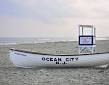
Monday, June 27, 2016

From Somers Point to Hamburger Hill

From Somers Point to Hamburger Hill 

Mid-May 1969 

After finishing their last academic chores at school college coeds Susan Davis and Elizabeth Perry left their dorm room for the last time, packed Susan's dark blue Chevy convertible and headed for the Jersey Shore for some good times.

On the other side of the world in Vietnam it is what Lynda DeVanter and Duncan MacRae would call in Army acronym " R&R" - rest and relaxation. 

Since graduating from nursing school in Baltimore Lynda enlisted in the Army and was now working at a MASH field hospital where they had received the first and then second wave of casualties from Operation Apache Snow, an order from Major General Melvin Zais to take Hill #937 - that would become known as Hamburger Hill.

There was Mount Suribachi at Iwo Jima in World War II, Pork Chop Hill in Korea and now Vietnam had Hamburger Hill. They were all heavily entrenched defensive high ground positions that had to be taken by direct assault, with heavy casualties on both sides.

While Iwo Jima was strategically placed, there was nothing strategic about Hill #937 other than the fact there were two North Vietnamese regular battalions of 800 men entrenched there mainly underground in a series of tunnels. They were led by a general Ma Vinh Lan, who sat huddled in a tunnel under the hill in Thua Thien Province, scouring maps under a lit lantern that rested on a hard bound book written in Chinese – Sun Tzu – the Art of War, that says an attacking force must be five times as strong as a well-entrenched defender of the high ground.

When the first wave of casualties came in Lynda was playing volleyball with other nurses and corpsman, just as she had on the Ocean City beach.

By the fourth day of the battle the field hospital was full and Lynda and the doctors and other nurses had worked for two days and nights straight on without sleep, so when there was a break in the action Lynda took the opportunity to take a quick cold shower in the canvas draped latrine.

She had been wearing a white T-shirt, stained with some soldier's blood that read: "Anchorage 7 for 1," and put that back on after the refreshing shower. Wrapping her wet hair in a towel she stepped barefoot around some puddles in the red dirt compound.

At the same moment a jeep driven by Marine lieutenant Duncan MacRae was waved through the front gate and kicked up clouds of red dust as it pulls to a sudden stop.

Duncan had seen the long bare legged Lynda walking between tents dressed only in the Anchorage T- shirt and then looking into her eyes recognized her from that memorial summer of '65 at the Jersey Shore.

Calling out "Lynda!" She stopped in her tracks, smiled and walked over to the jeep, glancing at each young googling guy and settling on the driver as she said, "What are the Marines doing here?"

"We're here to bail out the Army, again," Duncan said with a grin.

He didn't have to tell Lynda that the Army was suddenly short of pilots and the Marine unit was called in for support, as the continuing battle was straining equipment, support and supplies, and pilots were in high demand at the moment.

"I wouldn't have even noticed you if you weren't wearing that T-shirt," said Duncan.

"Yea, it reminds me of good times," said Lynda.

"Well I'm on a mission right now," Duncan said, "but I'll probably see you around campus over the next few days." 

"Yes," Lynda replied, without saying her next dreary thought that he would be bringing in more shot up bleeding soldiers for her to patch up.

"When we get back to the Anch I'll buy the first ten rounds," Duncan said as he restated the jeep and Lynda waved goodbye.

“Those ten rounds will only cost me ten bucks,” Duncan explained with a laugh, “since the beers there are seven for a dollar.”

Duncan was a tough guy in the field on a mission, but he loved what he did, wanted to enjoy it and have a little fun while they did it, and that attitude rubbed off on his crew.

Pulling up a few hundred yards the jeep stopped in front of a big tent with a sigh that read: OPERATIONS.

Duncan went in, followed by the three crewmen, who stood back by the tent door flaps while Duncan walked up to a group of six leaning over a table full of sand and introduced himself.

"Good to see you Lieutenant," a full bird colonel said as they shook hands.

The sand table on legs was full of white sugar sand that momentarily reminded Duncan of the clean white beaches at the Jersey Shore, but he quickly snapped himself back to the reality of the situation.
The sand was piled into a series of small hills, one of which was Hill #397 that the colonel kept poking a stick into, saying "Our mission is to take ammo, supplies and fresh troops in and take wounded out."

Then looking at Duncan, he lit a cigar and walked out of the tent, past Duncan's crew. The crew wasn't really necessary, and they knew that - they were only temporarily short of pilots, but Duncan insisted he fly with his regular crew.

One of the five Army pilots standing around the sand table then took out a small box of wood matches, broke one in half and held out six match heads, while explaining that on each of the last three days the lead helicopter was hit by a ground to air missile or rocket as they entered the valley.

The enemy had a rocket launcher but could only use it once and hit the first chopper in the formation.
"Short straw gets the lead," the Army pilot said as he held out the match sticks for each pilot to pick.
Duncan's big hand, that would normally be pounding out and twirling pizza dough on the Ocean City boardwalk this time of year, grasped the hand with the matches, his fist overlapping them all, and revealing a wrist band that each pilot recognized as the silver ball bearings of the turbo charged rotor-blades of a Huey helicopter. The part that made it fly. Their eyes followed the hand up to the face of Duncan, who said, much to the dismay of his crew, "I pick them all so I got the short one and I take the lead."

He didn't get any argument from the other pilots, though one of his crewmen rolled his eyes and the other two groaned.

“Okay Lieutenant, you take the lead.”

As they all walked to a row of six Bell Helicopter HU1b “Huey” choppers, still being worked on by maintenance crews, Duncan was confident he could fly the bird, very similar to the Marines version, and his gunners could handle the weapons systems. But before boarding each man stopped to notice the rows of bullet and machine gun holes that had riddled the fuselage.  

Duncan took off first and as he headed out one of the Marine gunners told the ten teenage Army
soldiers of the 101st Airborne, 3rd Brigade, half of them black, about the enemy rocket attacks on the lead helicopter, and they as they realized they were the lead helicopter, a quiet gloom set in.

Two weeks earlier the same ten men in this platoon were sitting at a long table at Kelly’s Café in Wrightstown, New Jersey, drinking beer by the pitcher, provided by the Fort Dix drill sergeant Leroy Brown, from Chicago Illinois, who led them through their pre-deployment training. Brown was also the leader of the base orchestra, and promised them that he would have the band serenade them when they came home, if they came home alive. If they came home alive they would come back as they left, through Fort Dix and McGuire Air Force base, if dead they would come home in a box at Dover, Delaware.

While each of the Army pilots had flow into this valley of death a dozen times, it as new terrain for Duncan, who flew the formation low at tree top level, so they couldn’t be seen until the last minute, but they certainly could be heard. After a few minutes Duncan began to recognize some of the hills that were represented by humps of sand on the sand table in the Operations tent. The second one he knew was the one with the rocket launcher, and the third hill was the Hill #937 - what they now called Hamburger Hill, their target destination.

The side gunners began to open up as soon as they took fire, and before long all six helicopters in the squadron had every gun blazing. When they got to the second hill every pilot in the formation envisioned what they had seen the last three days – a rocket taking out the lead helicopter, but they flew on, and to everyone’s surprise, nothing happened.

Another minute they were hovering over a white circle painted on the red dirt and circling in for a gentle landing, the ten fresh troops began jumping out even before the copter put down. The only thing Duncan wasn’t used to was the continuing flirtation of the rotor blades, as the Marine version had an automatic shut off for carrier landings.

After the new men got out with all of their gear, they were met by shirtless, sweaty and hungry soldiers who took the supplies from the gunners, and within a few minutes, stretchers with bodies on them were loaded aboard before the walking wounded got on and squeezed in and around the gunners, a few sitting on the side door, their legs dangling as Duncan lifted off, pulling back on the throttle stick.

One by one the other five helicopters followed as Duncan led them over the tree line, taking a sharp turn that everyone in the plane could feel, and then straightening out, making a beeline to the FOB – Forward Operating Base and MASH hospital.

With their guns blazing on both sides, and a bullet piercing shooting through both sides of the chopper but not hitting anyone, Duncan pushed it to top speed, and then settled back in his seat, pushed his radio button and said, “Renegade 1 to Zip Lock,” and when he got the return, “Zip Lock, go ahead Renegade one,” he said, “mission complete, on return leg with Renegades one to six. Over.”
Then he looked over to his co-pilot, and with a grin that Jack Nicholson would make famous, said, “Are we having fun yet.”

Just then another round came in the door and hit one of the side gunners, who went down silently. The other gunner turned around and took over his gun and fired it until the return fire ended, then sat down and put his arms around his fallen brother, who looked him in the eyes and said, “Tell my mother I love her,” before he died.

The battle of Hamburger Hill lasted another week, ten days total, and by May 20, 1969, the tactical withdraw of the enemy gave the Americans small victory that came with great cost. There were 630 enemy killed, three captured, and Hill 937 was now cleared, and then deserted and left for the jungle to regrow, as it was of no strategic value.

The Americans had put 1800 infantry into the battle, fired 20,000 rounds of artillery, flew over 200 air missions, dropped 900 tons of napalm, and listed over 400 casualties, 72 killed in action. So many helicopters were shot or damaged they didn’t count them.


The day after the battle, May 21, 1969, Susan Davis and Elizabeth Perry drove the Chevy convertible over the Walt Whitman Bridge into New Jersey bound for the Jersey Shore with high hopes. They had never heard of Hamburger Hill, and never would. 

Next: Jimmie, Ritchie and Napoleon in the Village 


Lynda in Vietnam 
Image result for Lynda van devanter Home By Morning Vietnam nurse


Wednesday, June 22, 2016

From Somers Point to Monterey

Monterey Pop – June 1967 – Ushering in the Summer of Love

From Somers Point to Monterey

When Joe Walsh of the Nomads, Jimmie Johnson of the Starliters and Richie the Black Hippie left town at the end of the Summer of ‘65, when they got to the crossroads at the Somers Point Circle they went in different directions, Joe headed west in his VW van, excited about being a freshman in college – Kent State, Ohio, while Jimmie and Richie went north to New York City.

Jimmie, the Starliters’ guitarist stayed with Joey Dee and the Pepperment Twist boys for a few more months, as part of the house band at the Pepperment Lounge, an uptown joint popular with the straight college crowd. Ritchie the Black Hippie, who played guitar and sang on Schriver’s Pavilion drifted back to the Village – Greenwich Village – the hip downtown area that was for New York City what Heights-Asbury was in San Francisco, Venice was for Southern California and Rittenhouse Square and South Street were in Philadelphia – hippie magnets.

Richie followed Napoleon, the only other black hippie in the Ocean City boardwalk scene in the summer of ’65. Like Richie, Napoleon was tall and thin and sported a big black afro hair do, who made a living selling his hip art on the boardwalk in the summer and on MacDougle Street in the Village in the fall and winter. Napoleon would do things like a psychadelic day glow Elvis on black velvet.

Richie and Napoleon shared a room they rented by the week and Richie got a steady gig at the Café Au Go Go, where Buzzy Linhart performed and  John Hammond, Jr. played traditional blues and folk music. Yea, the same John Hammond, Jr. who was in Albert Grossman’s office and affirmed secretary Mary Martin’s answer to Bob Dylan’s question of - who was the best rock & roll band in the world at that moment?

Levon and the Hawks was The answer Mary Martin uttered out, and John Hammond backed her up, saying he caught them on the road in Ontario when they backed rockabilly Ronnie Hawkins, and yes, they are the best he’s ever seen, which got Levon and the Hawks the full time job of backing Bob Dylan when he “went electric.”

It was harder for Jimmie to get a gig.

Wearing his fancy suits he wore as a Starliter, Jimmie occassionaly wandered downtown to catch Hammond and Richie at the Café Au Go Go and he auditioned for a number of  jobs playing solo  until he finally got one.

Jimmy was tired of playing the same songs every night with Joey Dee and the Starliters and wanted to strike out on his own, but he struck out the first few times he tried out for a gig. One afternoon Jimmy caught a ride to North Jersey where he auditioned as a solo act at a truck stop bar off the Turnpike. While he sat on a bar stool on an empty stage and played a few songs for the manager, Les Paul, with his son in tow, stopped into the bar for a cold one and a coke for his son and picked up a schedule for when he was to play there, as Les was a respected entertainer who played guitar while his wife sang, mainly dainty, slow ballads that the long distance truck drivers loved.

Some years earlier, while tinkering with his guitars, Les Paul invented the solid body electric guitar, guitars that were now being officially marketed as Telecasters.

Sitting there in the dark and empty bar, drinking and talking with the manager as he audition Jimmie, Paul noticed that the tall, thin black dude on stage was playing one of his guitars – a Les Paul Stratocaster. And he noticed that he was playing it in a totally different and unique way – the way it was designed to be played. Paul wanted to compliment the young man but he had other business to conduct in the city and didn’t want to interfere with his audition.

While driving to New York City with his son Les Paul thought about the audition some more and after finishing up his business in the city he stopped at the truck stop bar again and asked the manager what happened to the black guitarist, as he wanted to talk to him.

Sorry, the manager said, he didn’t get the gig, too loud and erratic.

He only said his name was Jimmie.

Unable to get a steady gig as a solo act, Jimmie put a band together – Jimmy James and the Blue Flames, and began to make a name for himself in the downstairs basement underground club Café Wha?

John Hammond, Jr. played all the clubs in the Village, and caught up to Jimmie one night when he was at the Gaslight and between sets walked across the street to the Club Wha? John began to slip Jimmie a few bucks to join him on stage and jam for an hour.

When word of Jimmie’s guitar antics got out, other bands would go out of their way to see him, including the Rolling Stones, the Animals and Mike Bloomfield, who played guitar on Dylan’s recording of “Like A Rolling Stone,” the hit song of the summer of ’65, and a song that Jimmie would adopt as his own.

Two of the Stones, Bill Wyman and Charlie Watts, and Linda Keith – Keith Richard’s wife, stayed around to chat with Jimmie one night after his show, and it was a show more than just a performance. While the Stones continued on their tour of the States, Linda stayed behind and went to the Café Wha?every night, and Jimmie moved into her fancy hotel suit. She brought Jimmie a brand new left handed Stratocaster, also invented by Les Paul, and she nursed him back to a more healthy constitution.

She also introduced Jimmie to Chas Chandler, a manager with the Animals, who with his partner former British Army commando Mike Jeffery, signed Jimmie to a record contract and took him to England.

They arrived in England on September 21, 1966, and even though Jimmie couldn’t get a work permit, that wouldn’t stop him from playing. On October 15, 1966 Jimmie sat in with jazz rock organist Brian Auger and the Oblivion Express at Blaises Club, beginning a series of London shows that are now popular bootleg collector tapes.

After open auditions for a drummer and bassist, who thought they were auditioning for the Animals, bassist Noel Redding was chosen along with cocky and brash drummer Mitch Mitchell to form the Jimi Hendrix Experience (JHE), premier in Paris at the Olympia on October 18, 1966 before 14,500 Parisians.

While Joe Walsh had left the Nomads to go to Kent State Ohio, where as a student he formed the “power trio” that became The James Gang, Jimi would lead the ultimate power trio – the Jimi Hendrix Experience.

Mick Jagger’s girlfriend Maryanne Faithful had heard about Jimi from Linda Keith and began to attend Jimi’s shows with Brian Jones, the nominal “leader” of the Rolling Stones who introduced the band to the American blues classics and jazz, but had not much to do with their recordings at the time.

While fine tunning their act, Noel and Mitch would egg Jimi on by calling him “nigger” and “coon,” and by mid-June 1967 – the Jimi Hendrex Experience would go to America, premiering at the “First” Monterey Pop Festival, and Brian Jones, while not performing, would have the honor of introducing America to the Experience.

As one of the most recognizable Stones, Brian Jones caused something of a stur among the crowds while walking around the fairgrounds in a flowing flower print robe, with a Buddweiser in one hand and Nico in the other. Nico, the lead singer of the Velvet Underground, when she came to Philadelphia, performed at the Second Fret, a small, below ground coffee house on Sanson Street near Rittenhouse Square. Now she was walking hand in hand with Brian Jones of the Rolling Stones at the First International Monterey Pop Festival, representing some of the foreign contingent.

When the Beatles came to Atlantic City in August 1965 they were surrounded by Beatlemania, thousands of cheering and screaming girls, and only got a breather when they slipped into Cape May and stayed unobtrusively at the Lafayette Hotel on the beach for two days and a night before appearing in Philadelphia.

When the Rolling Stones came to Atlantic City George Hamid, the owner of Steel Pier, picked them up at the airport in his convertible and drove them to the boardwalk where they got some pizza and hot dogs and walked around without being noticed. Now, two years later, Brian Jones was a celebrity on par with the Beatles, was drawing a crowd, and loved it as he danced around the grounds with Nico.
Jones was listed as being on the Festival charity board along with Paul McCartney, Mick Jagger, Brian Wilson, Donovan, Johnny River, Smokey Robinson and John Phillips of the Mama and the Papas, the idea being that the bands would play for their expenses only, and all profits would go to the charity, and that’s pretty much the way it went except for the out of pocket payments to Ravi Shankar and Country Joe McDonald and the Fish.

The whole festival was put together in less than six weeks by John Phillips and his manager Lou Adler, and the former Beatles publicist Derek Taylor, manly with $45,000 provided by ABC for the movie rights.  

The Monterey Fairgrounds, where the Monterey Jazz and Folk Festivals are also held, officially only holds some 7,000 people, and that was the paid attendance, but they say there were over 20,000 people within earshot of the stage where Brian Jones took the microphone and said, “Direct from England – appearing in the States for the first time – Jimi Hendrix – the Jimi Hendrix Experience.”

With such a short intro, Jones let the music speak.

“Killing Floor,” “Hey Joe,” and then beginning with the opening cords of “Wild Thing,” Jimi suddenly switches to the opening notes of Dylan’s “Like a Rolling Stone.”

“Once upon a time you dressed so fine, didn’t you?”


Monday, June 13, 2016

Flashback - June 5, 1968

Flashback – One year earlier - Wednesday morning June 5, 1968

Wednesday June 5, 1968 was the morning after the New Jersey and California primary elections in which my candidate Eugene McCarthy had lost narrowly to Robert F. Kennedy, Jr., 36 to 31% in New Jersey and 46 to 42% in California, a fact I had known when I went to sleep.

What I wasn’t prepared for when I awoke that morning was my father – a Camden homicide policeman, stuck his head into my bedroom door and woke me with the announcement that “Bobby was killed last night.”

Bobby was killed last night? What did that mean?

Looking back, I was attracted to Eugene McCarthy like young people are attracted to Bernie Saunders today – not because of his looks and charisma but because of his ideas, and Gene McCarthy was one of the first Senators to come out publicly against the war in Vietnam.

I too, as an ignorant teenager, recognized the folly of Vietnam as not a war to protect our freedom, liberty or justice, it was a political war being waged by young Americans to boost the defense contractors stocks on wall street. I found a radical book store in downtown Philadelphia and began to buy Evergreen Magazine, a slick New Left publication that had good articles and even some real literature. It once ran a doctored photo of LBJ as a fat army sergeant with grenades handing from his chest and made the point.

So I was one of the first young students to attend a meeting for McCarthy for President in South Jersey, where a number of delegates pledged to McCarthy were chosen or volunteered to be on the campaign ballot, including Rutgers professor Jay Sigler and the owner of the Cherry Hill Mall book store.

One of McCarthy’s biggest supporters in South Jersey was John Testa, who owned a pet shop on Route 38 in Cherry Hill, and according to my father, under FBI observation for being a suspected communist. Testa had fought against the fascists with the Abe Lincoln Brigade in the Spanish Civil War and though on the right side they lost the war that was to be a harbinger for World War II. Testa’s son was a school teacher in the Camden ghetto and Testa permitted the McCarthy campaign to use a store front he owned as a campaign headquarters.

My father warned me that Testa was a communist and to be careful as he was considered a serious subversive, and one afternoon he took me to a meeting at another vacant store front on Kaighn Avenue in Camden, one of the worst parts of town. There he introduced me to a half dozen old men in loose fitting wrinkled suits – the last local survivors of the Abe Lincoln brigade and the group that the FBI and the US government considered to be the biggest threat against democracy. They weren’t a threat to anyone.

But the kids were. Backed by a small regiment of youths, including me, who got “Clean for Gene,” and adopting the old style political tactics of identifying every registered voter in the county who supported McCarthy and opposed the war, we swarmed New Hampshire, went door to door and convinced a near majority to vote against the machine. While President LBJ won the March 12 primary 42 – 49%, it was a slim enough victory that caused LBJ, a few days later, to announce that he was no longer a candidate.

That stunning announcement was met a few days later with the entrance of RFK into the race. Since RFK had also, belatedly come out against the war in Vietnam, both Democratic candidates were anti-war candidates, and after losing two primaries to McCarthy RFK began to pick up momentum and support based mainly on his charisma and brother’s martyrdom.

I didn’t like RFK because of that, but I didn’t hate him either, so when my father woke me to tell me he had been murdered, I didn’t know what the repercussions would be.
How could such a high profile politician be murdered by his enemies who would be allowed to literally get away with murder?

After giving a victory speech in the ballroom of the Ambassador Hotel, RFK was led out by way of the kitchen, where he was shot by two pistols, one by Siran B. Siran who was a few feet in front of him, and another shot by a pistol that was inches from his head, as described by the pathologist who performed the autopsy.

A recently discovered audio tape of the assassination includes more than ten shots, more than can be fired by one gun alone.

But none the less, only one crazed programmed assassin was convicted and he doesn’t remember anything.

Later, during the 1980 election Bobby, Jr. and his younger brother Michael stayed at my home in Ocean City while on the campaign trail, and I got them to attend a fund raising party in Margate at a Stockton professor’s home and had Larry Harrris at the black WUSA radio station to interview Bobby on the air.

I also skied with some of the Kennedys and was saddened to learn that Michael had died of a skiing accident.

But it was the assassination of RFK that June 1969 night in California that radicalized me politically against the machine that still runs things today.

With the death of Bobby Kennedy the McCarthy campaigners like me expected his followers to join us in the effort to end the war, but instead they put up a fudgy George McGovern to carry Bobby’s cross, and McGovern would screw things up enough that Richard Nixon would be chosen to lead the country for better or for worse.

I was a loyal Leo however, and I stuck it out with my candidate McCarthy, and somehow got out of work at Mack & Manco’s for a week that August to attend the Democratic National Convention in Chicago, a lesson in how democracy works, and the subject of many nightmares and at least one future flashback.

In reading the Press of Atlantic City news articles on the continuing investigation of the 1969 Memorial Day Parkway Coed Murders, there is a photo of the Kennedy family placing flowers at the Arlington Cemetery grave of Robert F. Kennedy on the first anniversary of his murder, and an article on protests of some veterans because RFK was not a veteran, despite being murdered as a civil servant.


Thursday, May 26, 2016

Prequel to 1969

Prequel to 1969 – The Summer of Love Continued


1969 - The Summer of Love Continued is a Sequel to Bill Kelly’s Waiting on the AngelsThe Long Cool Summer of ’65, a light, easy reading, episodic Roman a clef novel that takes place over the course of the summer of 1965 in Ocean City and Somers Point, New Jersey, a seasonal Jersey Shore resort then popular with the college crowd.

Waiting on the Angels – The Long Cool Sumer of ’65 Revisited


Waiting on the Angels – The Long Cool Summer of ’65 Revisited – Text Only 


It was also a crossroads departure point for many of the real life characters whose further adventures are chronicled in this follow up, including Conway Twitty, who went from rock & roll to country music, Bob Dylan, who went electric, taking Levon and the Hawks out of Tony Marts with him, Tedo Mambo – the first hippie rock star, Joe Walsh, Stevie Nicks, Jimi Hendrix, Dave Herman, Linda VanDevanter, Grace Kelly, Ralph “Sonny” Barger, David Brenner, Tom Snyder, Chris Mathews and a host of ordinary people who came together in a small place at the same time and made special things happen, as recounted in this still unfolding story.

They say 1967 was the “Summer of Love” – as conceived, concocted and devised by Madison Avenue Advertising executives as an overall attempt to describe, brand and profit from the huge cultural shift that radically altered society. This multi-dimensional cultural shift suddenly increased the numbers of mobile free spirits who chose to follow a “counter-culture,” - mainly young, care free, long haired, liberal baby boomers who rejected the corporate wall street profit motive and drifted off with flowers in their hair to Monterey and Heights-Asbury on the west coast, and the Village – Greenwich Village in the southside of the city – New York city. They were in search of love and happiness and discovered marijuana, hashish, LSD and other psychedelic spirits that infused a generation.

Those they called “hippies,” who were a distinct minority in 1965, were nearly a clear majority by 1969, and in America mob rules, not necessarily for the better.

Now in retrospect, it’s easy to see how it went from the cool vibes of the Monterey and Atlantic City Pop Fests and the au natural mud orgy called Woodstock to the suddenly catastrophic nightmare at Altamont, killing a dream.

Getting there was another matter. 

Prologue - The Parkway Murders

1969 – The Summer of Love Continued 

Prologue - The Parkway Murders 

Just as the Labor Day 1964 murder – political assassination of Harry Anglemeyer set the stage for the Summer of ’65, the Memorial Day 1969 weekend Parkway murders were an ominous beginning to the sequel, set four years later at the same location – in the immediate vicinity of the Somers Point Circle crossroads.

Just as many of those who spent the summer of ’65 at the Jersey Shore and then moved on to the next chapter in their lives – back to school, work, the concert trail, Vietnam, other new blood came to town, mostly blue blood, upper middle class college kids, not looking for an answer to life’s key questions, just looking for a good time, and most found it there.


Act 1 Scene 1 - The Girls Come to Town

Act 1 Scene 1 


The Girls Come to Town 


The girls couldn’t get to the Jersey Shore fast enough.

They felt like they were flying high above the Delaware river over the Walt Whitman bridge into New Jersey, the red ball of sun rising over the eastern horizon ahead of them, their brown wavy hair blowing in the wind, one bare foot sticking out of the passenger side window, and with her toes shifting the side view mirror to reflect her and then on to Susan Davis, smiling behind the wheel of her dark blue 1966 Chevy convertible, black top down.

In the passenger seat “Liz” – Elizabeth Perry unfolds a bright red scarf and lets if fly in the breeze. The girls, both 19, had just finished a semester at Monticello Junior College in Godfrey, Illinois, Liz looking forward to going back for her second year at Monticello while Davis was planning to attend Ithaca College in New York. 

They were due in Durum, South Carolina on Saturday to attend the graduation from Duke of Davis’ brother, and it being Tuesday morning they were going to spend the next few days on the beach and boardwalk at Ocean City, New Jersey – “America’s Greatest Family Resort.”

When it came to a fork in the road, as Yogie Berra would say, they took it, veering away from the Black Horse Pike and onto the Atlantic City Expressway toll road, Susan beeping the car horn twice as they both began singing, “Expressway to your heart,” a then popular song often heard on the radio.

After a round of loud laughs and giggles and a moment of silence Davis turned the radio on to hear static, so she tuned the dial until she got a clear station: “Michel Schurman – with your WOND news at the Jersey Shore,” who then gave them a well received weather report – “clear, sunny and mild.”

A few minutes later they passed the Hap Farley Service Plaza without stopping, and then a few miles before Atlantic City they took the Garden State Parkway South across Patcong Creek, bay waters that glistened in the rising sun, and past mile marker 32 – 32 miles from Cape May, on the opposite side of the four lane, woods and tree lined Parkway – the spot where they would meet their tragic fate in a few days time.

Getting off at the Somers Point – Ocean City Exit they head down MacArthur Boulevard, they hedge around the Crossroads Circle – if it was a clock - coming in at six o’clock and passing the diner, Your Father’s Mustache at three, and the Circle Liquor Store at two and going out at noon, shooting over the causeway bridge above Rainbow Channel, the top of which gives them a clear view of the vast Great Egg Bay. They inhale the first scent of salt air and squint at the rising sun that silhouettes the outline of the Ocean City skyline, their next destination.

Over the second causeway draw bridge they ride through town, past the gas stations, drive-ins and diners, catching the lights past the Chatterbox, Post Office, Watsons and the Bus Station and pull to the curb in front of a row of houses just before the chain link fence of the empty parking lot.

While Susan raised the black canvas top and locked the car, Liz pumps a few nickels into the parking meter and they head up to the wooden boards, their heals clicking and soft, flower print dresses flurrying in the wind, concealing their bathing suits underneath.

Heading past a row of glass telephone booths on one side and movie posters on the other they pass under the theater marquee before stopping to look up and down the nearly deserted boardwalk, only a few bicycles, strollers and a lone fast walker.

First hearing and then glancing over to the lone hippie playing guitar on Shriver’s Pavilion, they twerel and dance across the boards to his off beat tune, descend the steps to the right of the Pavilion, kick off their shoes and feel the cool sand seep through their toes. Then they run across the beach, past the deserted white Lifeguard stand with red lettering that reads: 9th Street, they pull their dresses up to their knees and wade into the gently breaking surf.

Looking around to take things into perspective, they are in the cool shade as the sun slowly rises above the Music Pier to the north side. The long, flat ocean horizon is lined with three distinct boats – a sailboat under sail, an anchored and bobbing fishing boat with lines outstanding and Russian fishing freighter far at sea. A lone fisherman cast his surf pole at the end of the rock jetty, and all seems well in the world.

Smiling at each other without saying a word they walk back to the boardwalk where they find most of the stores are closed, so holding their shoes in their hands they walk daintily back across the boards, past the row of phone booths and back down the street to their car.

While Susan puts another nickel in the meter, Liz glanced at the hand painted wood sign next to a mailbox that read: Syben Guest House - Rooms for Rent – 712 Ninth Street. It was one of four, old cedar sided rooming houses that lined the south side of the street between the boardwalk parking lot and the bus station. Watson’s restaurant on the corner and the post office anchored the small but quaint neighborhood at the end of the line.

The door at 712 opened and out comes an older lady in an apron with a broom in hand who begins to sweep the steps before looking up, noticing and smiling at the two girls on the sidewalk.

It wasn’t long before her husband Walter Syben was carrying two suitcases of luggage into the front door of Syben Guest House, where Mrs. Syben was having the girls sign the guest book: Susan Davis – Camp Hill, Pa. - Elizabeth Perry – Excelsior – Minnesota.

“You girls can park your car in the driveway next to the house and get it off the meter,” said Walter Syben, carrying the luggage up the stairs to a second floor bedroom, “and you have a room with a view.”

A part time Pennsylvania farmer, Walter Syben had purchased the main street rooming house in 1965 for less than $20,000 and enjoyed working the summer tourist season at the shore before returning to his farm for the winter, in his view the best of two worlds.

Leaving their suitcases unopened on the twin beds, the girls took two keys, as Mrs. Syben explained, one for the front door and the other to their room. They would’t each need a set they explained, because they would be constantly together. Then they moved the car into the driveway, locked it, and headed for the boardwalk. There they would each take a phone booth, call home collect to let their parents know they arrived save and sound.

Then, as they say, they would “hit the beach, the boards and the bars,” in that order. 

Next up: Act 1 Scene 2 – Prom Night – The Morning After


Act 1 Scene 2 - Prom Night - The Next Morning

Act 1 Scene 2 - Act I Scene 2 – Prom Night – The Next Morning


Still in the black tuxedos, their ties hanging lose around their open shirts, we were four high school seniors heading to the Jersey Shore after dropping off our dates.

We were  headed to Ocean City, New Jersey, where my parents had recently bought a house, and traveling  via the back roads through Berlin where Mark would stop by his house to pick up some clothes. The house is dark, everyone’s asleep, so it was a quick in and out for Mark Jorden. Then it was back on the road, Jerry Montgomery driving, as usual, since he was the first to get his license and a car, so he just assumed that role.

Bob Katchnick was asleep on the other side of the back seat from me as we headed down the pike – the Black Horse Pike towards the shore, then taking the back roads past the old deer hunter’s roadhouse with the carved wood sign that read DOAKS. Past the deserted plastics factory, Donny’s Mays Landing Inn, across the creek and a sharp right takes you along Somers Point road that hugs the river.

Sunshine Park, the first nudist colony in America is probably the biggest landmark on the Somers Point-Mays Landing Road, but there are a few old, colonial era houses and a Catawba where a family died of suspicious circumstances, possibly murdered a century ago. Then there’s Jack’s Grove all night café under the trees before the marina and bridge to Somers Point.

With the golf course on the left and Kennedy Park on the Highbanks and bay on the right, you sneak up to the Somers Point Circle from the south at nine o’clock on the dial and pass Your Father’s Mustache, the Crab Trap and Circle Liquor before heading over the Ocean City causeway bridge.

While the Point Diner on the circle just across from Your Father’s Mustache is the most popular all night cafes, there were two other diners, one relatively new one on the south side of Ninth Street and Bill Brown’s Diner just off the alley behind the Italian joint at West Avenue.

Bill Brown, they say, was a Camden guy, like we were, so that’s where we pulled in and parked in the small lot next to the diner. It was still dark, the sun wasn’t up yet, but the bright neon lights of the diner made Katchnick squint as he work up when the car stopped moving.

Bob was strikingly Troy Donahoe handsome but shy, thoughtful and quiet. His younger sister was beautiful hippie and his best friend Bob Lodge was a tall, lanky artist who saw something funny in everything. The two Bobs.

Jerry liked to laugh too, and they all laughed at me and Mark when we talked politics.
That’s how we met, as the year before I was a volunteer for Gene McCarthy, the anti-Vietnam war candidate, whose showing in New Hampshire forced LBJ to resign from the race, leaving the door open for RFK to get killed and the riots at the 1968 Democratic National Convention in Chicago, that I was a part of.

If Chicago radicalized me against the political system, I don’t known what radicalized Mark, but he went from basketball team jock at a prestigious prep school to CCHS – Camden Catholic High School, giving up sports all together and earning a scholarship to NYU – the hippest college on the East Coast in the heart of Greenwich Village in the City – New York City.

Unlike the other two diners that were really busy at this time, Bill Brown’s was half empty even though it was a small place – six stools on each side of two counter and three booths on each side of the door, each with a flipping juke box that cost a dime a song – three for a quarter, playing three tunes while listening to the hit songs others have played including "Hot Fun in the Summertime," "Grazing in the Grass" and "Wedding Bell Blues." 

The talk at the table was not about music, or college, but what they were going to do that summer. I knew what I was going to do – work at Mack & Manco’s pizza joint on the boardwalk at 9th Street, and offered to try to get hem jobs too, but they all wanted to do something else.

Around the same time, sitting in a Madison Avenue advertising office in New York City, two young men in jeans and t-shirts talked with a group of men in suits and ties, convincing them to match their multi-million dollar investment in a music festival to be held late that summer near Woodstock in the Catskill Mountains of upstate New York, an even that would affect everyone in some way or another, especially the four of us sitting in a booth in Bill Brown’s Diner in Ocean City, New Jersey at five o’clock in the morning on the day after the prom.

Next: Act 1 Scene 3 - Flashback - from Somers Point to Woodstock 

Related image